
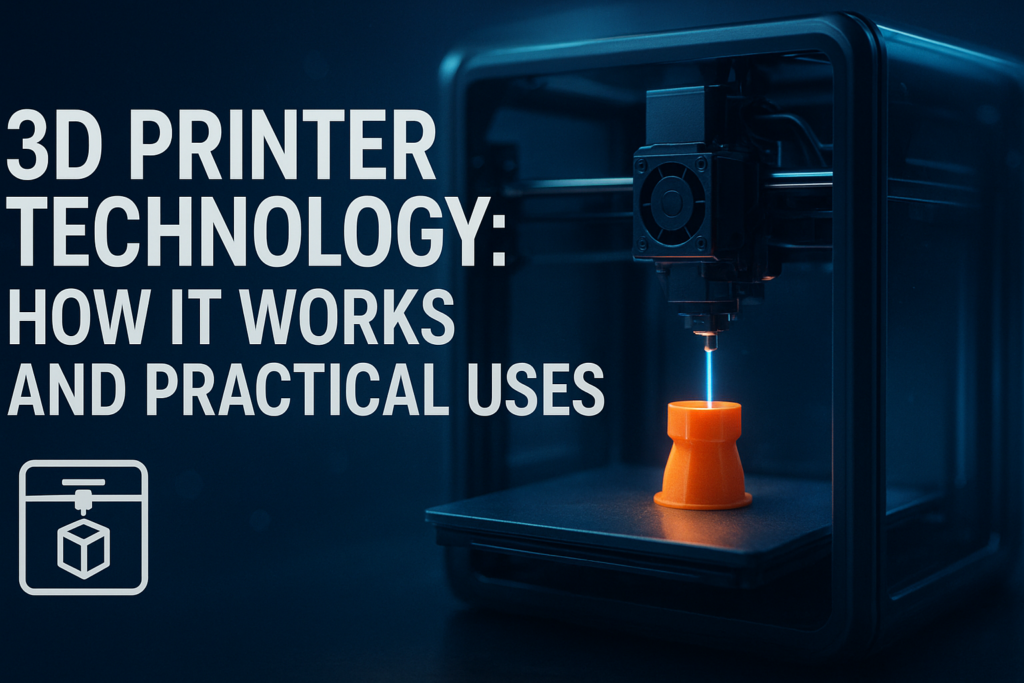

3D Printer: The Ultimate Guide to Understanding and Using 3D Printing Technology
3D printers have revolutionized manufacturing, prototyping, and creative processes across various industries. Whether you’re a hobbyist, engineer, or entrepreneur, understanding how 3D printing works and how to choose the right 3D printer can open up endless possibilities. This comprehensive guide covers everything you need to know about 3D printers — from technology basics and types to applications, advantages, and FAQs.
What is a 3D Printer?
A 3D printer is a device that creates three-dimensional objects by building layers of material based on a digital 3D model. This additive manufacturing process contrasts with traditional subtractive methods, like cutting or drilling.
3D printers use various materials such as plastic, resin, metal, and even biological substances to produce detailed prototypes or functional parts.
How Does a 3D Printer Work?
3D printers operate by interpreting 3D digital designs and depositing material layer by layer to form an object. The general steps include:
- Designing: Create a 3D model using CAD software or download a pre-made design.
- Slicing: Convert the 3D model into thin horizontal layers using slicing software.
- Printing: The printer lays down material layer by layer based on the sliced data.
- Post-processing: Remove supports, cure, or finish the object if necessary.
Types of 3D Printers
Understanding the main types of 3D printers is essential to choosing the right one for your needs. Each type uses different technologies and materials suited for various applications.
| 3D Printer Type | Technology | Main Materials | Common Uses |
|---|---|---|---|
| Fused Deposition Modeling (FDM) | Melts and extrudes thermoplastic filaments | PLA, ABS, PETG, Nylon | Prototyping, education, hobbyist projects |
| Stereolithography (SLA) | Uses UV laser to cure photopolymer resin | Resin | Dental, jewelry, detailed prototypes |
| Selective Laser Sintering (SLS) | Fuses powdered material with laser | Nylon, metal powders | Functional parts, aerospace, automotive |
| Digital Light Processing (DLP) | Uses digital light to cure resin in layers | Resin | High-detail models, dental, jewelry |
| Metal 3D Printing | Laser or electron beam melts metal powder | Steel, titanium, aluminum | Aerospace, automotive, medical implants |
Key Features to Consider When Buying a 3D Printer
Choosing the right 3D printer depends on your budget, experience, and project requirements. Here are essential features to evaluate:
- Printing Technology: FDM for beginners; SLA/DLP for fine details; SLS/metal printing for industrial parts.
- Build Volume: Maximum size of the object you can print.
- Material Compatibility: Types of filament or resin the printer supports.
- Print Resolution: Layer height and XY resolution affecting detail quality.
- Speed: How fast the printer can build the object.
- Software Compatibility: Supported CAD, slicing, and control software.
- Ease of Use: Features like touchscreen, auto bed leveling, and pre-calibrated settings.
- Cost: Include printer, materials, maintenance, and potential upgrades.
Common Applications of 3D Printers
3D printing has transformed various fields by enabling rapid prototyping, customized manufacturing, and creative exploration. Here are some popular uses:
- Product Prototyping: Quickly iterate design ideas without large production costs.
- Education: Helps students grasp engineering, design, and scientific concepts.
- Healthcare: Customized prosthetics, implants, and anatomical models.
- Architecture: Scale models of buildings with intricate details.
- Automotive & Aerospace: Manufacturing lightweight, durable parts.
- Fashion & Jewelry: Creating intricate and bespoke designs.
- Art & Creativity: Enabling unique sculptures, toys, and gadgets.
Advantages of Using a 3D Printer
3D printing offers numerous benefits over traditional manufacturing methods:
- Cost-Effective Prototyping: Reduces material waste and tooling costs.
- Customization: Easily create personalized products and components.
- Speed: Rapidly produce prototypes or limited-run parts.
- Complex Geometries: Manufacture designs impossible with traditional methods.
- Reduced Inventory: Print on-demand rather than storing large stocks.
- Innovation: Supports experimentation and iterative design.
Challenges and Limitations
- Material Restrictions: Not all materials are printable or cost-effective.
- Print Speed Variability: High-detail prints can take hours or days.
- Size Limits: Printer build volume limits object dimensions.
- Post-Processing: Some prints require significant finishing work.
- Equipment Cost: Industrial-grade printers can be expensive.
How to Maintain Your 3D Printer
Maintaining your 3D printer ensures consistent print quality and longevity.
- Regular Cleaning: Remove leftover filament or resin residues.
- Lubrication: Keep moving parts smooth using manufacturer-approved lubricants.
- Calibrate Bed Leveling: Ensures first layer adhesion and print accuracy.
- Check Nozzle & Extruder: Prevent clogging and wear for smooth material feed.
- Firmware Updates: Keep software up-to-date for improved functionality.
Popular 3D Printing Software
The choice of software greatly affects your 3D printing experience. Here are essential types and examples:
| Software Type | Purpose | Examples | Cost |
|---|---|---|---|
| 3D Modeling | Create or modify 3D designs | Tinkercad, Fusion 360, Blender | Free to Paid |
| Slicing | Convert 3D model into printable layers | Cura, PrusaSlicer, Simplify3D | Mostly Free, Some Paid |
| Printer Control | Manage print execution and monitor progress | OctoPrint, Repetier-Host | Free |
Frequently Asked Questions About 3D Printers
What materials can 3D printers use?
Common materials include PLA, ABS, PETG filaments for FDM printers; photopolymer resins for SLA/DLP; and nylon or metal powders for SLS and metal printers.
Are 3D printers safe to use at home?
Yes, most consumer-grade 3D printers are safe if used following the manufacturer’s safety guidelines, including proper ventilation and handling of materials.
How much does a 3D printer cost?
Entry-level 3D printers start around $200–$500, while industrial printers can cost tens of thousands of dollars.
Can I print multi-colored objects with a 3D printer?
Yes, some 3D printers support multi-material or multi-extruder setups to print in multiple colors or materials simultaneously.
How long does it take to print a 3D object?
Print times vary widely depending on object size, complexity, printer type, and resolution but can range from minutes to several hours or days.
Do I need special skills to operate a 3D printer?
Basic 3D printing requires familiarity with CAD software and printer operation, but many modern printers are designed to be user-friendly and beginner-friendly.
Conclusion
3D printers provide a transformative way to bring digital designs into the physical world. From rapid prototyping to personalized product manufacturing, the technology continues to grow in accessibility and capability.
By understanding the types of 3D printers, key features, and applications, you can make informed choices to leverage 3D printing for your projects. Whether you’re exploring creative hobbies or solving complex industrial challenges, a 3D printer offers limitless potential.
Embrace the power of 3D printing today and turn your ideas into reality!

Leave a Reply