
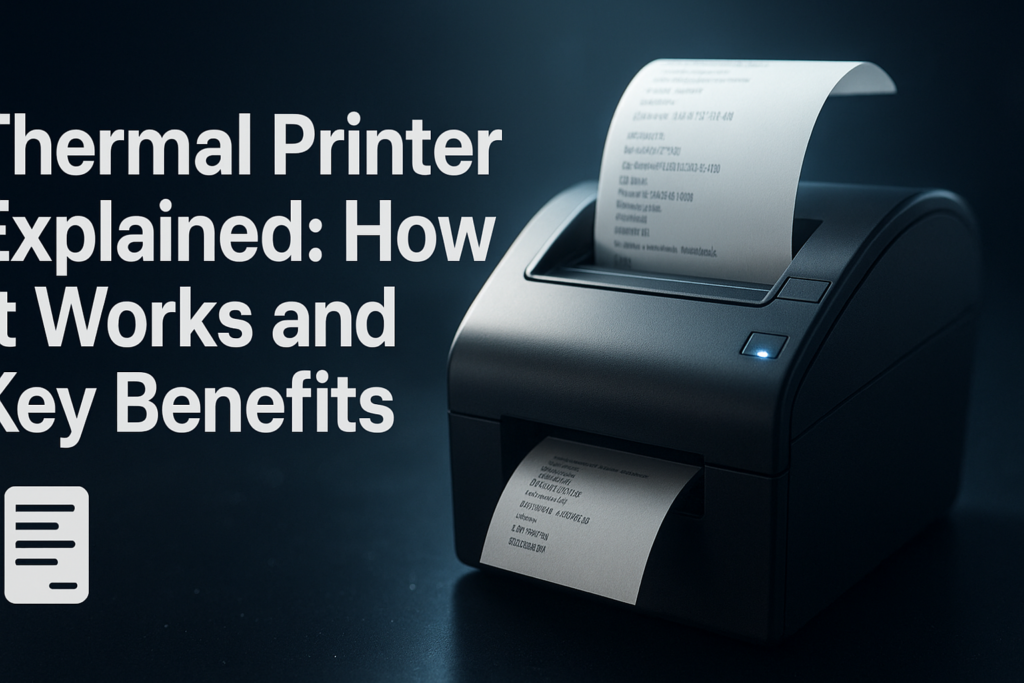

If you’ve ever received a receipt at a retail store, printed a shipping label, or handled tickets at an event, you’ve likely encountered a thermal printer. This device, often overlooked, plays a central role in many industries by providing fast, reliable, and maintenance-light printing solutions.
Thermal printers use heat to produce images on special paper, making them distinct from traditional inkjet or laser printers. This article explains what thermal printers are, how they operate, and why they’re favored in various commercial and industrial applications.
Table of Contents
- What Is a Thermal Printer?
- How Does a Thermal Printer Work?
- Types of Thermal Printers and Their Uses
- Advantages and Limitations of Thermal Printing
- Practical Applications Across Industries
- Choosing the Right Thermal Printer for Your Needs
- Frequently Asked Questions (FAQ)
What Is a Thermal Printer?
A thermal printer is a specialized device that prints images by selectively heating thermal paper as it passes over the thermal print head. The heat activates a chemical reaction on the specially coated paper, producing text or graphics without using traditional ink or toner.
This technology contrasts with inkjet or laser printing, which rely on ink cartridges or toner powders. Thermal printing tends to be more straightforward and efficient for high-volume, fast turnaround tasks such as receipts, labels, or tickets.
How Does a Thermal Printer Work?
Underlying Mechanism
The core component of a thermal printer is the thermal print head. It consists of numerous tiny heating elements arranged in a line or grid. When powered, these elements heat up in precise patterns corresponding to the desired print output.
There are two main thermal printing techniques:
- Direct Thermal Printing: Heat-sensitive paper is directly heated, darkening where heated to create the print. It requires special thermal paper but eliminates the need for ribbons or ink.
- Thermal Transfer Printing: A thermal print head melts ink from a ribbon onto the substrate (paper, fabric, plastic), resulting in durable and vibrant prints.
Print Process Steps
- The printer feeds the thermal paper or substrate across the thermal head.
- The print head selectively heats tiny areas based on the image or text data.
- The heat either changes the coating on the paper (direct thermal) or transfers ink from a ribbon (thermal transfer).
- The paper advances, and the process repeats to complete the print job.
Types of Thermal Printers and Their Uses
| Type | Printing Method | Common Uses | Pros | Cons |
|---|---|---|---|---|
| Direct Thermal | Heats special heat-sensitive paper directly | Receipts, tickets, shipping labels | No ink/ribbon needed, low maintenance, fast printing | Sensitive to heat and light; prints fade over time |
| Thermal Transfer | Transfers ink from a ribbon onto the substrate | Barcode labels, asset tags, outdoor labels | Durable prints, variety of media choices | Requires ink ribbons; higher consumable cost |
Advantages and Limitations of Thermal Printing
Advantages
- Speed: Thermal printers can produce prints rapidly, ideal for busy environments such as retail checkouts.
- Quiet Operation: Fewer moving parts result in quieter printing compared to impact printers.
- Low Maintenance: Elimination of ink cartridges reduces mess and maintenance time.
- Precision: Sharp and clear printing, especially for barcodes and small text.
Limitations
- Paper Sensitivity: Direct thermal papers can fade when exposed to heat, light, or oils over time.
- Cost of Consumables: Thermal transfer requires ribbons, increasing ongoing expenses.
- Color Limitations: Most thermal printers are monochrome; color printing requires specialized models.
- Media Restrictions: Direct thermal printing demands specific thermal coating on paper; not universal.
Practical Applications Across Industries
Retail and Hospitality
Point-of-sale (POS) systems frequently rely on direct thermal printers to generate receipts instantly. Amazon Go stores and fast-food chains use thermal printers to print proof of purchase or order tickets, enhancing efficiency at checkout and kitchen stations.
Logistics and Shipping
Shipping labels printed via thermal transfer printers offer durability and barcode fidelity that withstands rough transit. Companies like FedEx and UPS widely employ these printers for labeling packages with tracking details, ensuring smooth delivery operations.
Healthcare
Patient wristbands, prescription labels, and lab specimen tags often feature thermal printed barcodes and identifiers. The ability for quick, reliable printing in clinical environments makes thermal printers essential tools for healthcare providers.
Manufacturing and Inventory
Barcode and asset tagging via thermal printers streamline inventory tracking and production management. Durable thermal transfer prints resist smudging and environmental hazards on factory floors or warehouses.
Choosing the Right Thermal Printer for Your Needs
Finding the best thermal printer hinges on evaluating your printing volume, durability requirements, and media preferences. Consider the following:
- Print Volume: High-volume environments need printers with speed and low downtime; industrial thermal printers often meet these criteria.
- Print Quality: Barcodes and intricate graphics require higher resolution print heads (300 dpi or above).
- Media Type: Direct thermal suits short-term labels or receipts, while thermal transfer works better for long-lasting labels or different substrates.
- Connectivity: Options vary from USB and Ethernet to wireless; select based on integration needs.
- Cost of Consumables: Factor in price and availability of thermal paper or ribbons.
Reliable resources like The Best Printer offer comprehensive reviews and buying guides to streamline your decision-making process.
Frequently Asked Questions (FAQ)
What is the lifespan of prints from a direct thermal printer?
Direct thermal prints typically last from six months to two years, depending on exposure to heat, light, and environmental factors. For longer-lasting labels, thermal transfer printing is recommended.
Can thermal printers print in color?
Most thermal printers print in monochrome (black), but specialized models exist that can produce limited color prints, often through multi-color ribbons or thermal color technologies. These are less common and more expensive.
Are thermal printers cost-effective for small businesses?
Yes. Thermal printers require fewer consumables like ink and toner, reducing operating costs. For businesses that print receipts, labels, or tickets regularly, the efficiency and low maintenance make them worthwhile investments.
What types of paper are compatible with thermal printers?
Direct thermal printers require heat-sensitive thermal paper that darkens when heated. Thermal transfer printers utilize a broader range of materials including standard paper, synthetic labels, textiles, or special coated stock paired with an ink ribbon.
How fast can thermal printers print?
Thermal printers can reach speeds of up to 300 mm/s in industrial models. Typical retail receipt printers operate between 100–150 mm/s, ensuring quick customer turnover.
Final Thoughts on Thermal Printers
Thermal printers continue to be a cornerstone technology in environments demanding speed, clarity, and cost efficiency. Their blend of simplicity and versatility makes them ideal for printing receipts, labels, tickets, and more across many sectors.
Understanding the distinct types and applications helps you select a printer that matches your operational needs precisely. To dive even deeper into printer options, specs, and reviews, check out The Best Printer. Becoming familiar with thermal technology empowers better purchasing decisions, ultimately improving workflow and customer experience.

Leave a Reply